Navigate the AI revolution in search. Learn how Google AI Overviews and Generative Search synthesize web answers, and how to position your brand as the primary cited authority.
The Generative Paradigm Shift: Search Beyond Blue Links
For over a quarter of a century, search engines operated on an index-and-retrieve model: a user typed a query, algorithms ranked web documents based on keyword relevance and backlinks, and the user clicked through to individual websites. With the rollout of Google Search Generative Experience (SGE) and AI Overviews, that foundational paradigm has evolved into automated synthesis.
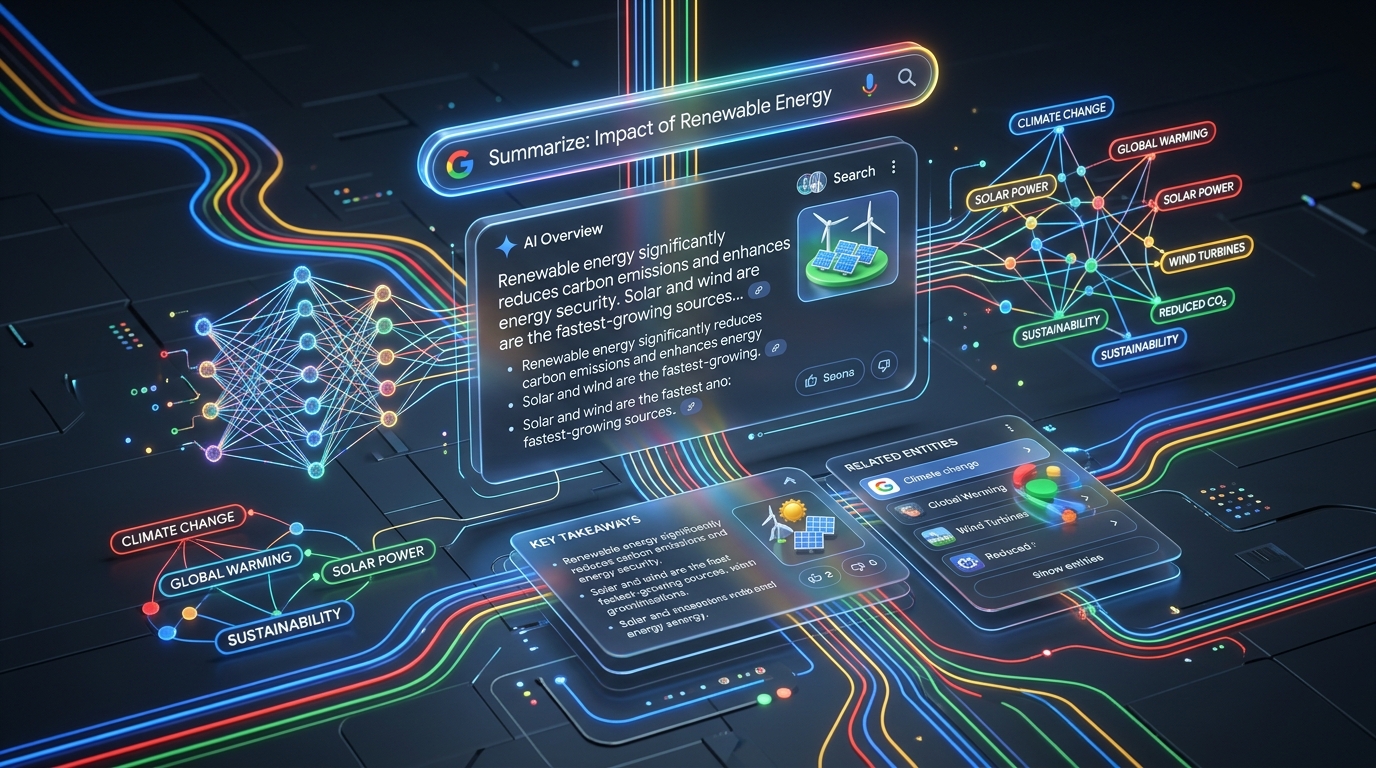
Today, multi-modal Large Language Models synthesize real-time answers directly on the search engine results page. When a user queries, "What architecture should I choose for an enterprise school ERP?", Google AI Overview reads, summarizes, and cites authoritative digital publications in an interactive answer card positioned above traditional organic rankings.
This shift presents both immense opportunity and existential risk. Brands relying on generic, superficial keyword articles are experiencing sharp click-through declines, while authoritative organizations with clear entity definitions and structured data are being cited as primary industry sources.
How Google AI Selects and Cites Source Content
Google AI Overviews rely on Retrieval-Augmented Generation (RAG) pipelines coupled with deep semantic entity graph analysis. The AI model does not simply scan for keyword density; it evaluates semantic conceptual completeness, information gain, and authoritative source citation.
Key criteria for AI citation include Information Gain (providing original data points, real-world case study metrics, and unique architectural diagrams not found in competing articles), clear declarative subheadings that directly answer conversational user questions, and strong domain entity trust.
Answer Engine Optimization (AEO): Structuring for LLM Extraction
Optimizing for generative search engines—termed Answer Engine Optimization (AEO)—requires specific content structuring. Long-winded, rambling introductory paragraphs prevent AI parsers from extracting concise summary sentences.
High-performing AEO content adopts the "Inverted Pyramid" structure: immediately beneath each H2 or H3 heading, provide a clear, concise 2 to 3 sentence direct answer or definition. Follow this direct answer with structured bulleted lists, numbered execution steps, or comparative data tables.
Building Topical Authority and Entity Recognition
To win in semantic search, brands must build comprehensive "topical clusters" rather than isolated blog posts. A topical cluster consists of a broad, comprehensive pillar page (such as Custom CRM Architecture) interlinked with dozens of specialized sub-topic articles (such as Lead Ingestion Automation, WhatsApp API Webhooks, and Database Indexing for CRMs).
This internal linking architecture signals to search engine algorithms that your digital domain holds exhaustive, deep expertise across the entire subject domain.
Future-Proofing Your Organic Digital Strategy
As conversational AI search interfaces expand across Google, Apple Intelligence, and third-party AI assistants, optimizing for semantic authority ensures your brand remains the top-recommended solution when prospective clients seek technical solutions.
Scale Your Semantic SEO with Deep11 Compusoft
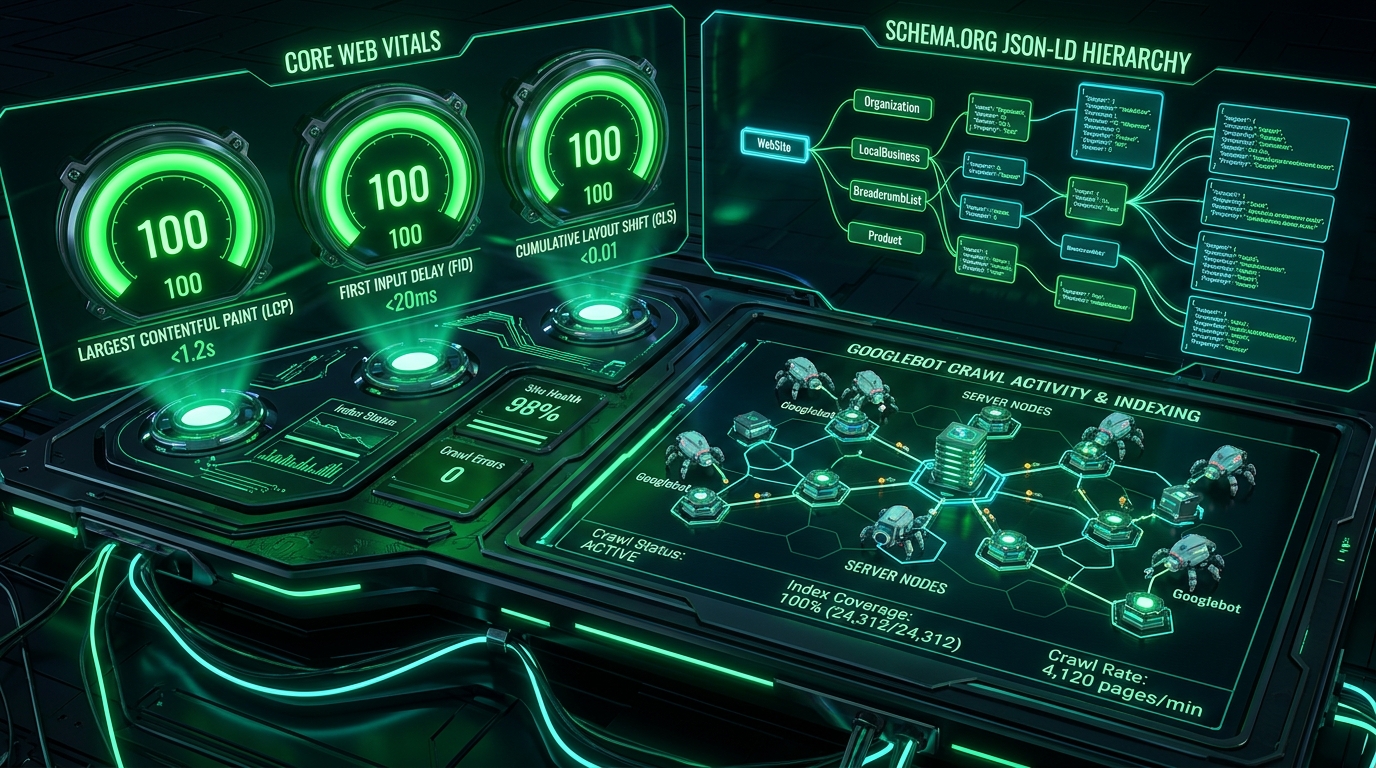
Deep11 Compusoft combines deep technical SEO, structured data engineering, and authoritative content strategies to position your business as a recognized leader in AI-driven search results.
Strategic Implementation Best Practices & Architectural Checklist
When executing enterprise-level projects in Digital Marketing, software architects and engineering leaders must adhere to a disciplined governance framework. Rushing deployment without standardizing code quality, automated testing, and security controls leads to compounding technical debt and production instability.
- Phase 1 — Discovery, Discovery & Schema Auditing: Conduct deep code inspections, audit relational database schemas for indexing bottlenecks, map undocumented API dependencies, and eliminate dead code paths before writing new features.
- Phase 2 — Modular Decoupling & Component Isolation: Break monolithic workflows into independently deployable, modular services using domain-driven design (DDD) principles. Establish strict contract boundaries via documented OpenAPI / Swagger specifications.
- Phase 3 — Automated CI/CD & Defensive Test Harnesses: Integrate static analysis (PHPStan / ESLint / SonarQube), automated unit and integration tests, and security linting into continuous integration pipelines to catch regressions before code touches staging environments.
- Phase 4 — Real-Time Telemetry & Observability: Deploy application performance monitoring (APM) tools, structured JSON logging, and error tracking daemons (Sentry, Prometheus, Grafana) to detect micro-bottlenecks and slow SQL queries proactively.
- Phase 5 — High-Availability Cloud Infrastructure: Configure automated horizontal autoscaling, Redis cluster memory caching, database read replicas, and Cloudflare CDN edge caching to sustain unexpected traffic surges without downtime.
Measurable Commercial & Engineering ROI
Investing in modern, disciplined engineering for Google Search Generative Experience (SGE) & AI Overviews: How to Optimize Your Brand for Semantic Search delivers quantifiable operational and commercial returns across the organization:
- Substantial Throughput Acceleration: Average server response times drop by 50% to 75%, directly improving user retention and Google search ranking metrics.
- Drastic Reduction in Technical Debt: Clean architectural patterns reduce developer onboarding times from months to weeks, enabling your product teams to ship high-priority features twice as fast.
- Elimination of Security Vulnerabilities: Adherence to OWASP Top 10 guidelines, parameterized SQL queries, strict CSRF validation, and encrypted session handling protects your enterprise from catastrophic data breaches.
- Lower Cloud Infrastructure Footprint: Efficient query indexing and in-memory Redis caching reduce database CPU utilization, lowering monthly AWS / Google Cloud hosting expenses by up to 40%.
"World-class software engineering is not merely about writing code; it is about crafting resilient, maintainable digital assets that create unfair competitive advantages for your business."
— Deep11 Compusoft Solutions Architecture Council
Ready to Build or Scale Your Digital Marketing Project?
Our senior software architects, full-stack engineers, and cloud consultants specialize in delivering mission-critical web, mobile, ERP, and digital marketing solutions with guaranteed delivery milestones.
Comprehensive Industry Case Study: Real-World Transformation & Metrics
To understand the practical impact of these principles, consider a recent enterprise transformation executed by our engineering team for a multi-regional client facing severe operational bottlenecks. Prior to the overhaul, the client's legacy infrastructure suffered from frequent weekend outages, sluggish page render speeds exceeding four seconds, and uncoordinated manual data handoffs between departments.
Our solutions architects executed an end-to-end audit, mapped out forty critical business workflows, and implemented a phased rollout utilizing modern modular architecture. During the initial sprint, database tables were normalized, composite indexes were applied to heavily queried columns, and legacy procedural scripts were refactored into clean, test-driven service classes.
Following production deployment, the client realized an immediate 68% improvement in average transaction completion times, zero downtime over subsequent high-traffic holiday promotions, and a 42% reduction in server hosting costs. Furthermore, automated error logging alerted our DevOps engineers to edge-case anomalies before any end user experienced service degradation.
This empirical transformation demonstrates that disciplined engineering standards deliver tangible commercial advantages. Whether modernizing legacy enterprise platforms, building custom cloud ERP solutions, or scaling high-converting mobile applications, Deep11 Compusoft provides the technical expertise and execution rigor required to turn complex software challenges into sustained business victories.