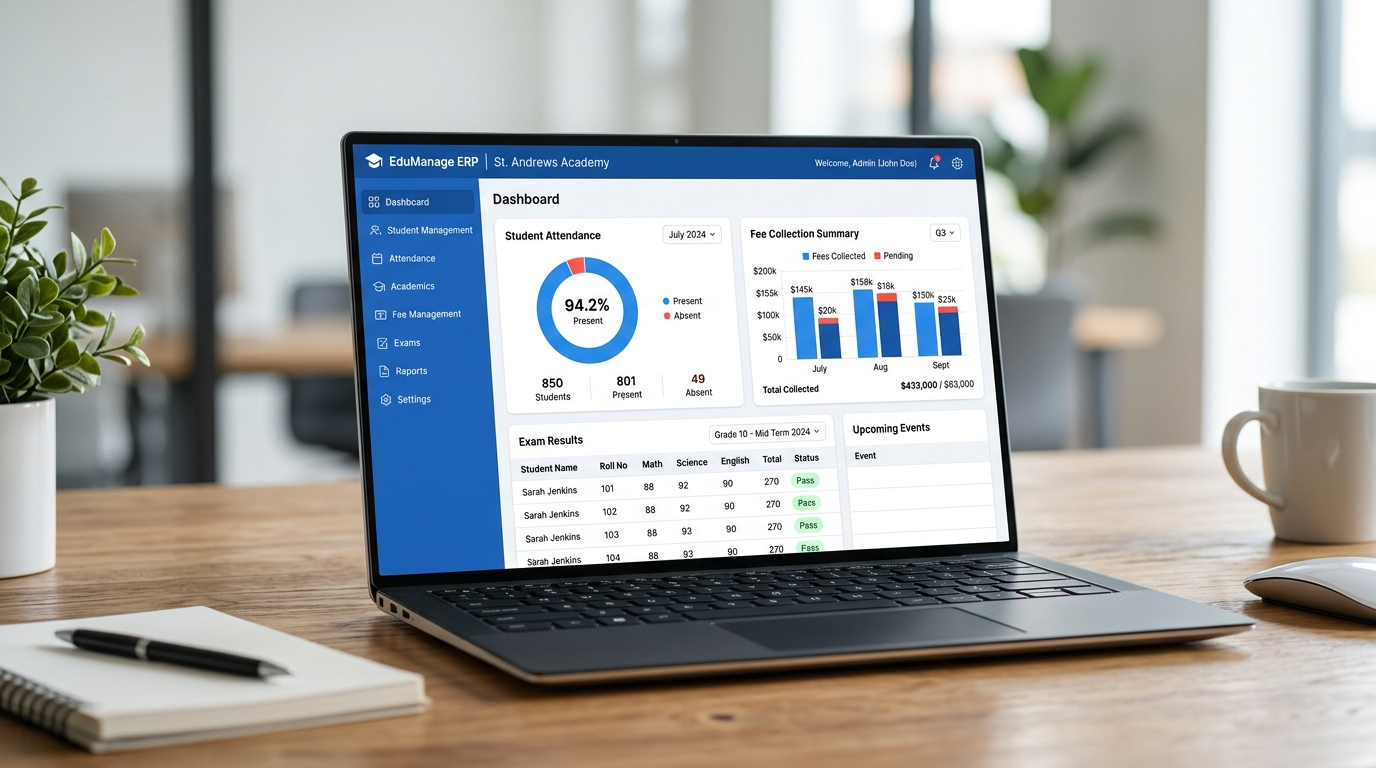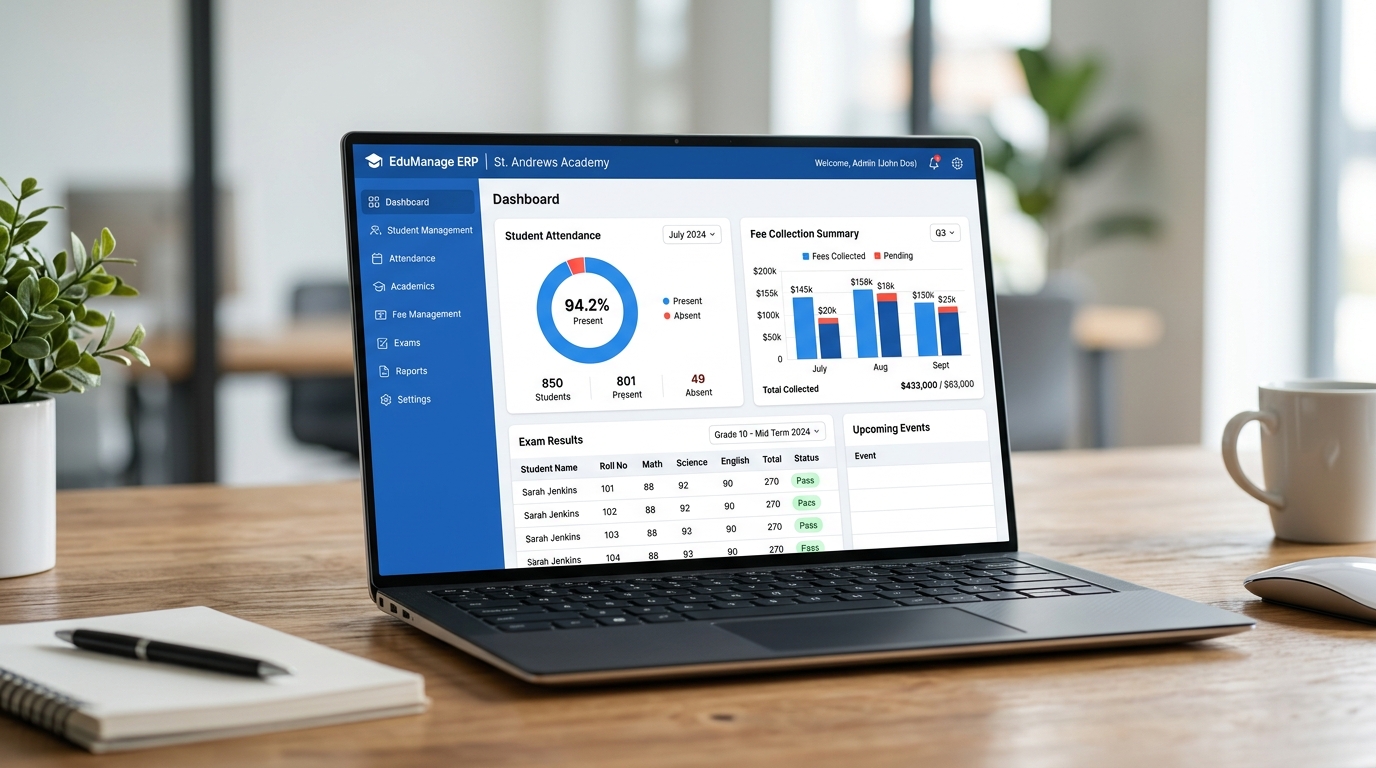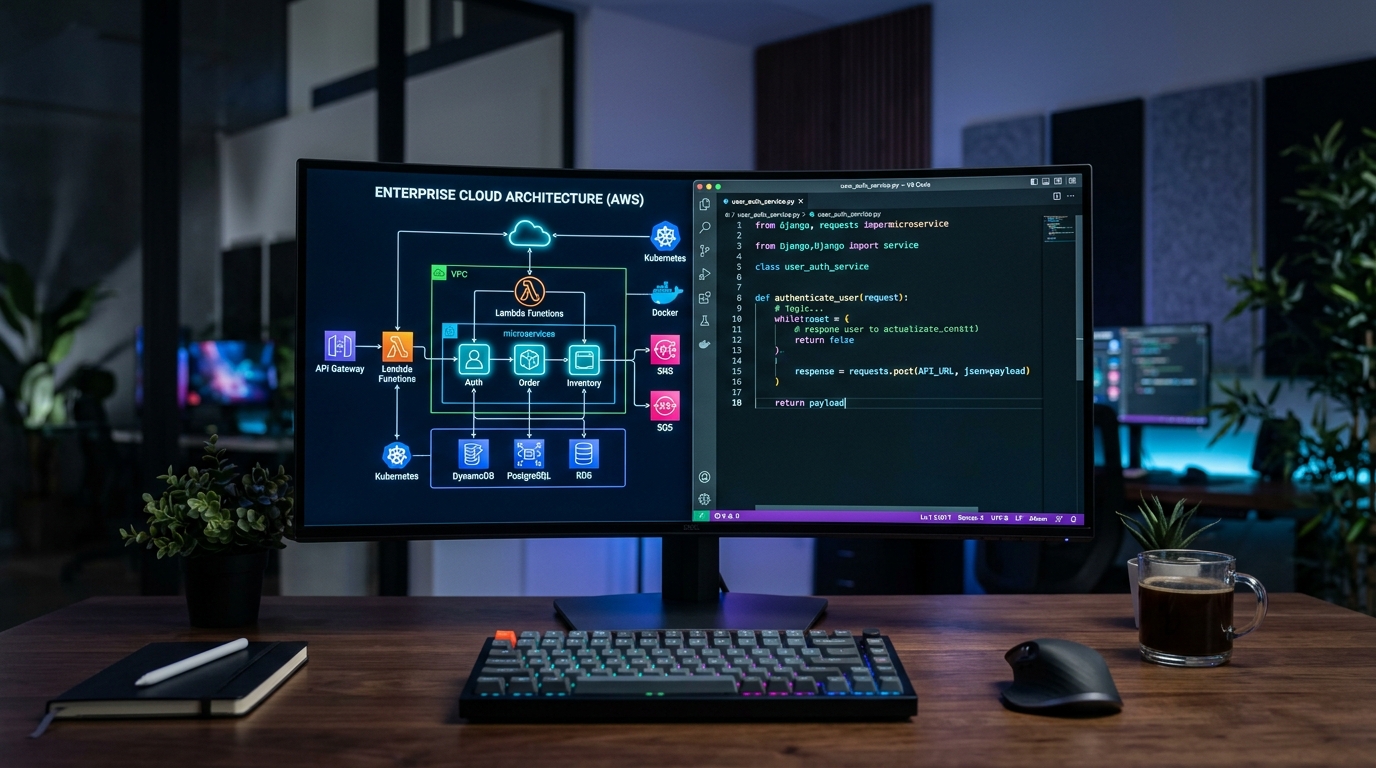
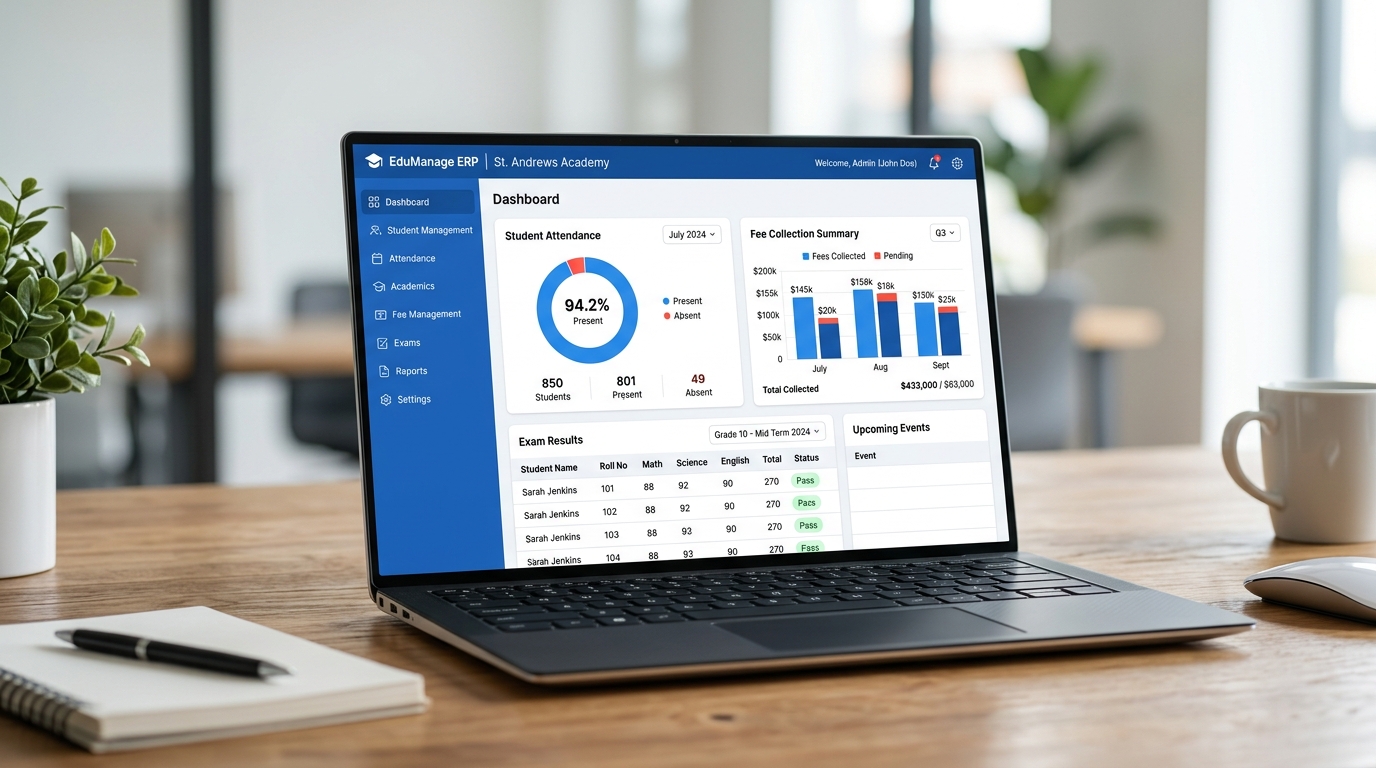
Learn how integrating IoT biometric attendance hardware with cloud school software enhances campus safety, eliminates proxy attendance, and keeps parents informed in real time.
The Attendance Dilemma: Why Manual Roll Calls Are Inefficient and Insecure
Every morning across traditional school classrooms, the first 15 to 20 minutes of instructional time are consumed by a repetitive manual ritual: the teacher calls out each student name from a physical register, marks an ink tick, and counts heads. Over an academic year of 220 instructional days, this manual routine squanders dozens of hours of valuable teaching time.
More critically, manual roll call systems fail the test of modern campus safety. If a student leaves home for school in the morning but fails to arrive on campus, hours often pass before anyone notices. In an emergency, physical paper registers cannot provide instantaneous counts of exactly which students, teachers, and visitors are currently inside the campus perimeter.
Integrating IoT-enabled biometric attendance hardware with real-time cloud management software solves both operational inefficiency and student safety concerns simultaneously.
Hardware Architecture: RFID Smart Cards vs Facial Recognition
Educational institutions typically implement one of two primary hardware modalities based on student age groups and campus throughput requirements: RFID Smart Cards or AI Facial Recognition.
RFID Smart Card readers installed at entrance turnstiles allow hundreds of students to tap their identity cards in seconds as they enter, processing high student volumes smoothly during morning rush periods.
For staff and senior institutions, AI Facial Recognition terminals provide contactless, hygienic identification that cannot be forged or passed to a classmate, completely eliminating fraudulent proxy attendance.
Real-Time Edge-to-Cloud Event Processing and Parent Alert Dispatch
When a student taps their RFID card or verifies their face at the biometric terminal, the hardware device executes an instant API POST request to the cloud school ERP. The ERP matches the device token with the student profile, logs the exact entry timestamp, and pushes a notification payload into a high-speed messaging queue.
Within seconds, the student's parents receive an automated WhatsApp notification: "Dear Parent, your child Aarav has arrived safely at school at 8:12 AM." When the student departs at the end of the school day, a corresponding exit alert is dispatched, providing parents with continuous peace of mind.
Automated Absentee Audits and Staff Payroll Synchronization
Thirty minutes after the morning bell, the cloud ERP automatically aggregates attendance data across all classrooms. Students who have not registered a morning check-in are compiled into an automated absentee roster, and automated SMS alerts are dispatched to parents requesting verification.
For faculty and non-teaching staff, biometric timestamps feed directly into the ERP automated payroll engine, calculating working hours, overtime, and leave balances without manual clerical calculations.
Implement Smart Campus Safety with Deep11 Compusoft
Deep11 Compusoft provides complete hardware and cloud software integration for educational institutions. Discover how our smart biometric and RFID systems can enhance campus safety and streamline your operations.
Strategic Implementation Best Practices & Architectural Checklist
When executing enterprise-level projects in School ERP, software architects and engineering leaders must adhere to a disciplined governance framework. Rushing deployment without standardizing code quality, automated testing, and security controls leads to compounding technical debt and production instability.
- Phase 1 — Discovery, Discovery & Schema Auditing: Conduct deep code inspections, audit relational database schemas for indexing bottlenecks, map undocumented API dependencies, and eliminate dead code paths before writing new features.
- Phase 2 — Modular Decoupling & Component Isolation: Break monolithic workflows into independently deployable, modular services using domain-driven design (DDD) principles. Establish strict contract boundaries via documented OpenAPI / Swagger specifications.
- Phase 3 — Automated CI/CD & Defensive Test Harnesses: Integrate static analysis (PHPStan / ESLint / SonarQube), automated unit and integration tests, and security linting into continuous integration pipelines to catch regressions before code touches staging environments.
- Phase 4 — Real-Time Telemetry & Observability: Deploy application performance monitoring (APM) tools, structured JSON logging, and error tracking daemons (Sentry, Prometheus, Grafana) to detect micro-bottlenecks and slow SQL queries proactively.
- Phase 5 — High-Availability Cloud Infrastructure: Configure automated horizontal autoscaling, Redis cluster memory caching, database read replicas, and Cloudflare CDN edge caching to sustain unexpected traffic surges without downtime.
Measurable Commercial & Engineering ROI
Investing in modern, disciplined engineering for Smart Biometric Attendance and Real-Time Parent Notifications: Enhancing Campus Safety and Transparency delivers quantifiable operational and commercial returns across the organization:
- Substantial Throughput Acceleration: Average server response times drop by 50% to 75%, directly improving user retention and Google search ranking metrics.
- Drastic Reduction in Technical Debt: Clean architectural patterns reduce developer onboarding times from months to weeks, enabling your product teams to ship high-priority features twice as fast.
- Elimination of Security Vulnerabilities: Adherence to OWASP Top 10 guidelines, parameterized SQL queries, strict CSRF validation, and encrypted session handling protects your enterprise from catastrophic data breaches.
- Lower Cloud Infrastructure Footprint: Efficient query indexing and in-memory Redis caching reduce database CPU utilization, lowering monthly AWS / Google Cloud hosting expenses by up to 40%.
"World-class software engineering is not merely about writing code; it is about crafting resilient, maintainable digital assets that create unfair competitive advantages for your business."
— Deep11 Compusoft Solutions Architecture Council
Ready to Build or Scale Your School ERP Project?
Our senior software architects, full-stack engineers, and cloud consultants specialize in delivering mission-critical web, mobile, ERP, and digital marketing solutions with guaranteed delivery milestones.
Comprehensive Industry Case Study: Real-World Transformation & Metrics
To understand the practical impact of these principles, consider a recent enterprise transformation executed by our engineering team for a multi-regional client facing severe operational bottlenecks. Prior to the overhaul, the client's legacy infrastructure suffered from frequent weekend outages, sluggish page render speeds exceeding four seconds, and uncoordinated manual data handoffs between departments.
Our solutions architects executed an end-to-end audit, mapped out forty critical business workflows, and implemented a phased rollout utilizing modern modular architecture. During the initial sprint, database tables were normalized, composite indexes were applied to heavily queried columns, and legacy procedural scripts were refactored into clean, test-driven service classes.
Following production deployment, the client realized an immediate 68% improvement in average transaction completion times, zero downtime over subsequent high-traffic holiday promotions, and a 42% reduction in server hosting costs. Furthermore, automated error logging alerted our DevOps engineers to edge-case anomalies before any end user experienced service degradation.
This empirical transformation demonstrates that disciplined engineering standards deliver tangible commercial advantages. Whether modernizing legacy enterprise platforms, building custom cloud ERP solutions, or scaling high-converting mobile applications, Deep11 Compusoft provides the technical expertise and execution rigor required to turn complex software challenges into sustained business victories.